The journey of machines dates back to ancient civilizations, driven by humanity’s innate curiosity and relentless pursuit of innovation. The invention of the wheel revolutionized transportation, but lesser-known innovations, like the water wheel, played a crucial role in shaping our world by harnessing natural forces for power generation.
Fast forward to the Industrial Revolution, and machines took a giant leap forward. The advent of electricity introduced compact motors, enabling the development of more complex mechanical systems. These advancements laid the foundation for the intelligent machines we interact with today.
The Birth of Intelligent Machines
While modern AI may seem like a futuristic marvel, its intellectual roots trace back to Greek mythology, where stories of autonomous, intelligent artifacts first emerged. Literature and folklore have long imagined mechanical beings mimicking human intelligence.
For more readings, go to our mutual friend wiki…
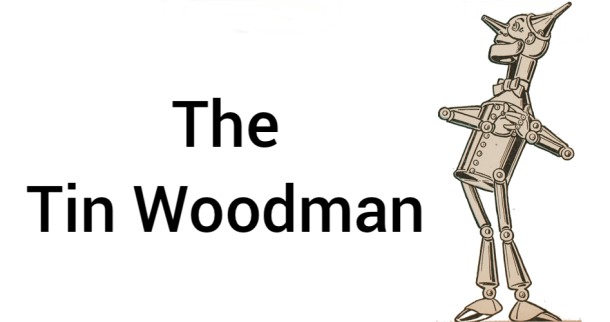
One of the earliest depictions of such a machine was Tin Woodman from The Wonderful Wizard of Oz (1900). This character sparked imagination, inspiring generations to envision machines capable of independent thought and action—paving the way for today’s AI-driven world.
What Defines an Intelligent Machine?
Imagine a piece of art, a symphony, or a novel—not crafted by human hands, but by an autonomous machine. When a machine begins performing intellectual tasks, with or without human assistance, it crosses into the realm of Artificial Intelligence (AI).
The term Artificial Intelligence was first coined by John McCarthy in 1956 at the historic Dartmouth Conference, marking the beginning of formal AI research. Since then, AI has evolved from a theoretical concept into a transformative force shaping industries worldwide.
AI in Action: Transforming Industries
AI is no longer confined to science fiction—it’s everywhere. Here are some of its real-world applications:
- Self-driving cars – Automotive & Transportation
- Smart advisors, security & authentication – Banking
- Virtual assistants – Hospitality
- AI-powered teaching assistants – Education
- Medical diagnosis & patient care – Healthcare
- Investment advisors & predictive analytics – Finance
- Smart home automation – Property & real estate
- Industrial robotics – Manufacturing
- Warehouse automation – Retail & logistics
Self-Driving Cars: A Disruptive Innovation
Among the most groundbreaking AI applications is autonomous driving, a technology poised to disrupt more than ten industries, including:
- Automotive & Transportation – Redefining personal and commercial mobility.
- Insurance – Changing risk assessment and policy pricing.
- Hotels & Hospitality – Revolutionizing travel logistics.
- Parking & Real Estate – Reducing demand for traditional parking spaces.
- Law Enforcement – Impacting traffic management and accident investigations.
- Auto Repair – Shifting focus to AI-driven diagnostics and repair.
- Food & Package Delivery – Enabling fully automated logistics networks.
Tesla: The Leader in AI-Powered Autonomy
If one name stands out in AI-driven self-driving technology, it’s Tesla.
Tesla’s CEO, Elon Musk, envisions a future where Tesla vehicles feature KITT-like artificial intelligence, reminiscent of the iconic self-driving car from Knight Rider. This vision is powered by deep learning, an advanced AI technique that extracts structured insights from massive datasets.

Every Tesla built in the past year is equipped with:
- 12 sensors positioned around the vehicle
- A front-facing camera near the rearview mirror
- A radar system beneath the front bumper
These systems work together, continuously collecting real-time data to enhance Autopilot mode—allowing Tesla vehicles to learn, adapt, and react much like human drivers.
From Tin Woodman to Tesla: The Evolution Continues
The journey from fictional robots like Tin Woodman to real-world AI in Tesla’s Autopilot is a testament to how far machine intelligence has come. As AI continues to advance, we are rapidly approaching a future where human-like AI—such as Sophia, the humanoid robot—becomes a reality.
Tesla’s Autopilot isn’t just a feature—it’s a machine learning powerhouse. Using deep learning algorithms, Tesla vehicles analyze sensor data, refine driving behaviors, and improve their own performance over time.
And this is just the beginning.
In the coming years, AI will redefine industries, reshape human-machine interaction, and blur the lines between science fiction and reality. Stay tuned for my next deep dive into Tesla’s Autopilot—how it works, how it learns, and where it’s headed next.
The era of intelligent machines is here. The question is—are we ready?
Will dig deeper in my next note…Autopilot!
 Life is a journey to learn and share with others that keeps you alive; never quit learning, never quit sharing. Someone said - "Knowledge is the only thing if you give, it will grow!"
Leave a comment